

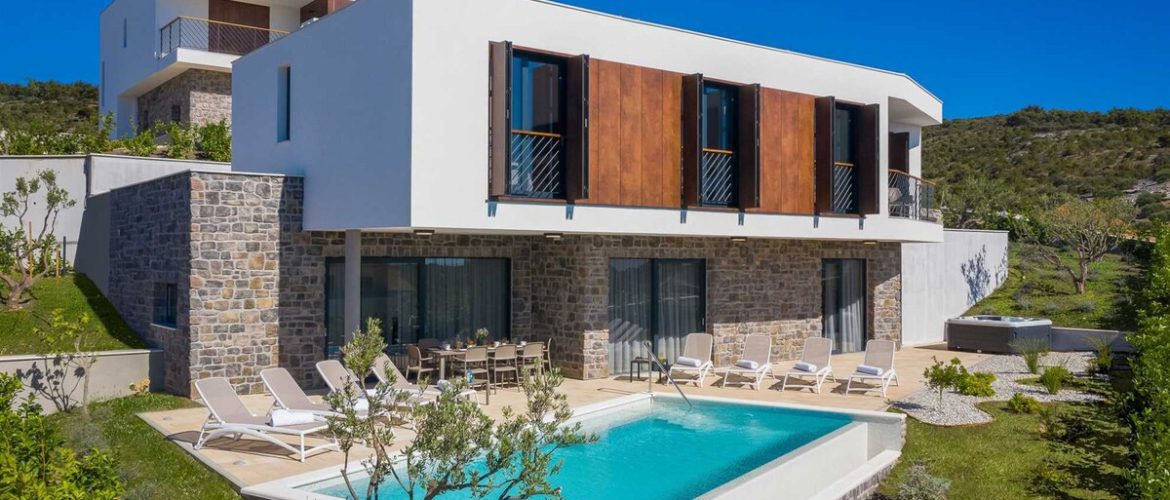
Why More Muslim Families Are Choosing Villas Over Hotels
The shift is quiet but it is consistent.
Across the most sought after destinations in the world, a growing number of affluent Muslim families are arriving not at the grand hotel entrance but at the private gate of a villa that nobody else knows they are in. The booking was made discreetly. The staff were briefed in advance. The kitchen was stocked before they landed. And for the duration of the stay, the family exists entirely on their own terms.
This is not a niche preference. It is becoming the default choice for a generation of Muslim families who have tried the hotel experience at the highest level and found that something was still missing.
The hotel, even the exceptional one, is a shared environment. The pool is beautiful but it is shared. The restaurant is world class but it requires a reservation and an audience. The lobby is impressive but it must be crossed each time the family moves between spaces. For a Muslim family travelling with children, elderly parents, women who observe modesty requirements or simply individuals who have reached a point in life where privacy is the point of the holiday, shared spaces are a structural limitation that no amount of five star service can entirely overcome.
A villa removes the limitation entirely.
The kitchen is fully equipped and stocked with halal ingredients arranged before arrival. The pool belongs to the family for the duration of the stay. Meals happen when the family is ready rather than when the restaurant is open. Children move freely without the low-level management that hotel environments require. Elderly parents rest without navigating lobbies, lifts and shared facilities. The family exists, for a week or two, as though the property was built for them. Because for those days, it was.
The financial calculation has also shifted. A villa that sleeps ten or twelve people, divided across a family group, often costs less per person than an equivalent number of hotel rooms at the same quality level. When the comparison is made properly, the villa is frequently not the more expensive option. It is simply the better one.
The halal dimension adds another layer of consideration that hotels, even the most well intentioned ones, struggle to fully resolve. A private villa with a dedicated kitchen and a chef briefed on halal requirements removes every dietary uncertainty from the trip. There are no questions about shared cooking surfaces, no label checking, no polite conversations with restaurant managers about which dishes are suitable. The food is simply right, from the first morning to the last evening.
The destinations where this trend is most visible are exactly the ones you would expect. The Maldives, where private island villas have long set the standard. Bali and Lombok, where the villa model has defined luxury travel for two decades. The Turkish Aegean coast, where the combination of extraordinary natural beauty and a Muslim cultural environment makes private villa stays particularly well suited to this audience. Zanzibar, Morocco and Oman, where the growth in high quality private villa inventory has tracked almost precisely with the growth in affluent Muslim travellers to those destinations.
The hotel industry has responded, partially. Some groups have invested in private pool villas, dedicated family compounds and accommodation that functions more like a residence than a room. The best of these properties have understood that the demand is not simply for more space but for a fundamentally different relationship between the guest and the property.
But the villa, in its purest form, still offers something the hotel cannot fully replicate. The absence of other guests is not a minor detail. For a Muslim family that has spent the year navigating shared environments, public schedules and the constant low-level adjustment that life in a non-Muslim majority country can require, two weeks of genuine privacy is not a luxury in the conventional sense.
It is the point of the trip.