

Is Turkey The New Dubai?
For the better part of two decades, Dubai was the answer.
Affluent Muslim travellers from across the world converged on a city that seemed to understand them instinctively. Halal food everywhere, world class hotels, extraordinary shopping, a social environment that required no navigation and a pace of development that made it feel like the most ambitious place on earth. Dubai did not just accommodate Muslim travellers. It was built, in many respects, around them.
But something is shifting.
Istanbul is increasingly being mentioned in the same conversations that once belonged exclusively to Dubai. Not as a replica and not as a replacement, but as an alternative that offers something Dubai has always struggled to provide. History, depth and a sense of place that was not constructed last year.
The numbers reflect this. Turkey has seen a significant increase in high net worth visitors from Gulf countries, Malaysia, Indonesia and the wider Muslim world over the last several years. Istanbul’s luxury hotel offering has expanded considerably. Private dining, world class hospitality and a retail environment that now competes seriously with the best in the region have all developed rapidly. Beyond Istanbul, the Aegean coast has quietly become one of the most sought after summer destinations for affluent travellers seeking privacy, exceptional food and natural beauty without the crowds of more established Mediterranean rivals.
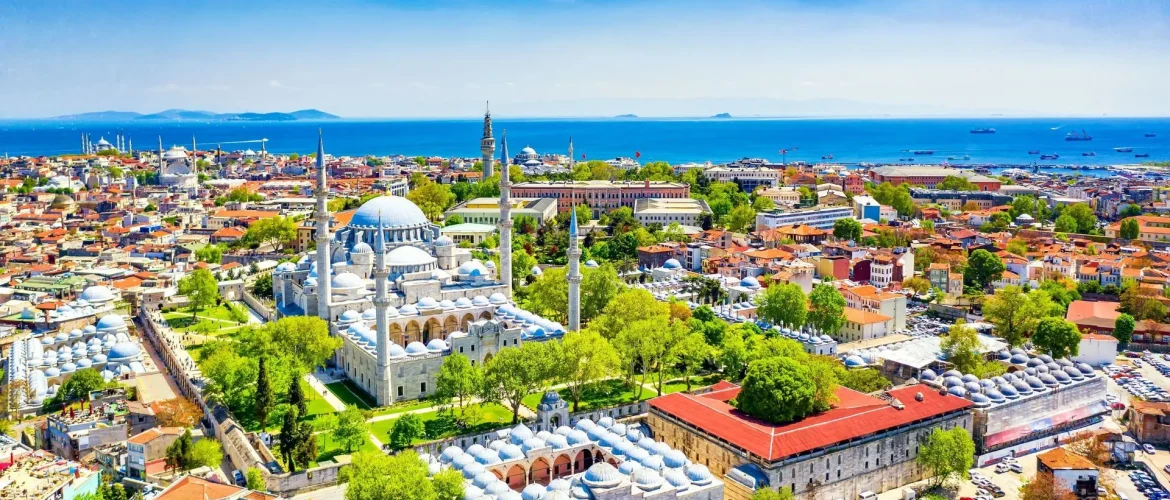
Turkey also has something Dubai cannot manufacture. The Bosphorus at dusk. The covered markets of the Grand Bazaar. The Ottoman architecture of Sultanahmet viewed from a private terrace. Cappadocia at dawn from a private balloon. These are experiences with genuine rarity. They cannot be replicated and they cannot be built somewhere else.
For Muslim travellers specifically, Turkey removes the practical frictions that complicate travel to non-Muslim majority destinations. Halal food is not a request. It is simply what is available. Prayer facilities are present throughout the city. The cultural environment is familiar without being identical to home, which for many travellers is precisely the right balance.
Dubai retains advantages that Istanbul cannot match. The infrastructure is newer, the connectivity from certain markets is better and the tax environment continues to attract business travellers and long term residents in ways that Turkey has not yet replicated. For a certain kind of trip, Dubai remains the most efficient answer.
But efficiency is not the only measure of a destination.
Istanbul offers something that appeals to a traveller who has already done Dubai several times and is beginning to want more. More texture, more history, more of a sense that the city existed before they arrived and will continue long after they leave. That is a different kind of appeal and it is one that a maturing luxury travel market increasingly recognises.
Turkey is not the new Dubai. It is something more interesting than that. It is a destination that is coming into its own at precisely the moment when the most discerning Muslim travellers are ready for it.